| Women |

|
| Tours |
|
| Tour services |
|
| Services |
|
| Information |
|
|
Nicaragua
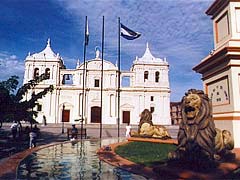 Nicaragua is Central America’s largest country at 130,000 km2. It is bordered by Honduras and the Gulf of
Fonseca in the north, Costa Rica in the south, the Caribbean Sea in the east and the Pacific Ocean in the west. Nicaragua is Central America’s largest country at 130,000 km2. It is bordered by Honduras and the Gulf of
Fonseca in the north, Costa Rica in the south, the Caribbean Sea in the east and the Pacific Ocean in the west.
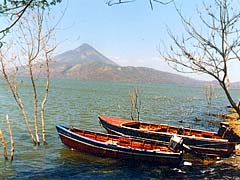
The Pacific basin in marked by a spine of 28 volcanoes that run from the northern Pacific gulf of Fonseca,
south into Lake Nicaragua and Costa Rica. Six are active, including the country’s two biggest San Cristobal and Concepcion and its smallest Masaya. Nicaragua has more crater lakes than any country outside of Africa with nine in all, six of which are in Managua area. The basin is separated from the central rolling hills and eastern rain forests by Central America’s two biggest lakes: Lake Managua and Lake Nicaragua. Lake Nicaragua is the 2nd largest in Latin America (falling a few square meters short of Lake Titicaca shared by Bolivia and Peru) at 8,264 km2 and is home to over 400 volcanic origin islands, including a dual volcano island that is the largest lake island in the world and three distinct archipelagos. Lake Nicaragua is separated from the Pacific Ocean by only
a 17 km wide strip of land, but drains into the Caribbean Sea by means of the Rio San Juan’s 190 km length.
 Nicaragua is hot with an average temperature of 82°F year round. Humidity averages around 75% and there are
two seasons, rainy and dry. The rainy season is from May to mid-November and dry in the months in between.
Almost all days year round begin sunny on the Pacific with rains coming in the afternoon and night and are
of short duration. The hottest time of year is from February to May when temperatures often reach towards 100°F
and days can be windy. The Pacific region experiences the longest dry season and the dry season becomes
progressively shorter as you head east towards the Caribbean. The most pleasant time is in the rainy season,
unless visiting the rain forests and/or Caribbean coast and islands, when the dry season is more recommended.
Both seasons have their benefits for if you don’t mind getting wet the rainy season is better for wildlife
viewing in the forests and jungle rivers, but the dry season better for sunning and snorkeling in the Caribbean.
Nicaragua is hot with an average temperature of 82°F year round. Humidity averages around 75% and there are
two seasons, rainy and dry. The rainy season is from May to mid-November and dry in the months in between.
Almost all days year round begin sunny on the Pacific with rains coming in the afternoon and night and are
of short duration. The hottest time of year is from February to May when temperatures often reach towards 100°F
and days can be windy. The Pacific region experiences the longest dry season and the dry season becomes
progressively shorter as you head east towards the Caribbean. The most pleasant time is in the rainy season,
unless visiting the rain forests and/or Caribbean coast and islands, when the dry season is more recommended.
Both seasons have their benefits for if you don’t mind getting wet the rainy season is better for wildlife
viewing in the forests and jungle rivers, but the dry season better for sunning and snorkeling in the Caribbean.
A constitutional democratic republic with executive, legislative and judicial branches,
Nicaragua’s presidents are chosen in popular elections and serve a one term limit of six years.
The current president is Enrique Bolaños who took office in January of 2002.
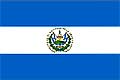
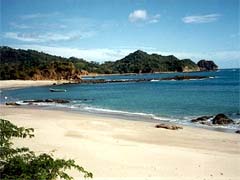 Flag description:three equal horizontal bands of blue (top), white, and blue with the national coat of arms
centered in the white band; the coat of arms features a triangle encircled by the words
REPUBLICA DE NICARAGUA on the top and AMERICA CENTRAL on the bottom; similar to the flag of
El Salvador, which features a round emblem encircled by the words REPUBLICA DE EL SALVADOR
EN LA AMERICA CENTRAL centered in the white band; also similar to the flag of Honduras,
which has five blue stars arranged in an X pattern centered in the white ban
Flag description:three equal horizontal bands of blue (top), white, and blue with the national coat of arms
centered in the white band; the coat of arms features a triangle encircled by the words
REPUBLICA DE NICARAGUA on the top and AMERICA CENTRAL on the bottom; similar to the flag of
El Salvador, which features a round emblem encircled by the words REPUBLICA DE EL SALVADOR
EN LA AMERICA CENTRAL centered in the white band; also similar to the flag of Honduras,
which has five blue stars arranged in an X pattern centered in the white ban
Located on the southern shores of the lake by same name, Managua has been the capital since 1852 has
a compromise between rival cities to the north and south of the city of Leon and Granada.
The population of the city is just above one million and is spread out in a green and volcanic setting.
The old city center was badly damaged in 1972 by an earthquake and a concrete downtown has never been
rebuilt; this along with a steady lake breeze makes Managua one of the least polluted, greenest and
quietest capitals in the world. Where downtown once stood is now a mixture of parks and open green spaces
punctuated by monuments, where it is not unusual to see horses grazing. Managua is also noteworthy in
that it is the only city in the world with four crater lakes within city limits and it has two more
just on its outskirts.
Economyñoverview: Prior to Hurricane Mitch in the fall of 1998, Nicaragua had been pursuing a number
of impressive economic reforms and had begun to shed the legacy of a decade of civil war and economic
mismanagement by posting strong annual growth numbers. The storm has put the reform effort on hold and
has changed economic forecasts for the foreseeable futureñNicaragua, the poorest country in Central
America was one of the hardest hit by the hurricane. Nicaragua sustained approximately $1 billion
in damages and will probably see GDP growth slow by at least one percentage point in 1999.
Hardest hit was the all-important agriculture sector, which is responsible for the majority
of exports. As a result, the trade deficit is likely to balloon in 1999 to roughly $900 million.
Significant aid and relief have helped to stabilize the country. In addition, the Paris
Club and other creditors have offered substantial debt relief. Nevertheless, additional
financing will be needed to restore the economy to its pre-Mitch condition.

|
New Wife
7320 N Dreamy Draw Drive
Phoenix, Arizona 85020
(602) 553-8178
FAX (602) 468-1119
Contact Us
|
|
THIS PROGRAM IS THE SOLE PROPERTY OF NEW WIFE AND MAY NOT BE COPIED IN ANY WAY OR FORM WITHOUT EXPRESS PERMISSION FROM NEW WIFE.
© COPYRIGHT 1996-2026 - ALL RIGHTS RESERVED.
|
|
|